
Tooth Extractions – Franklin Park, IL
Rebuilding Your Smile to Be Healthier
At Grand Dental in Franklin Park, we understand that no substitute can compare to your natural teeth, which is why we’ll do everything possible to save them. However, in some cases, we can preserve more of your natural teeth by removing one that’s severely decayed or damaged and puts surrounding ones at risk. That’s why we offer virtually painless tooth extractions in our Franklin Park, IL dental office as well as high-quality dental restorations, like dental implants, so you can maintain a healthier and happier smile.
Why Choose Grand Dental - Franklin Park for Tooth Extractions?
- Start-to-Finish Dental Implant Treatment
- Experienced, Licensed Prosthodontists
- Natural-Looking Dental Restorations
Reasons Why Tooth Extractions Are Necessary
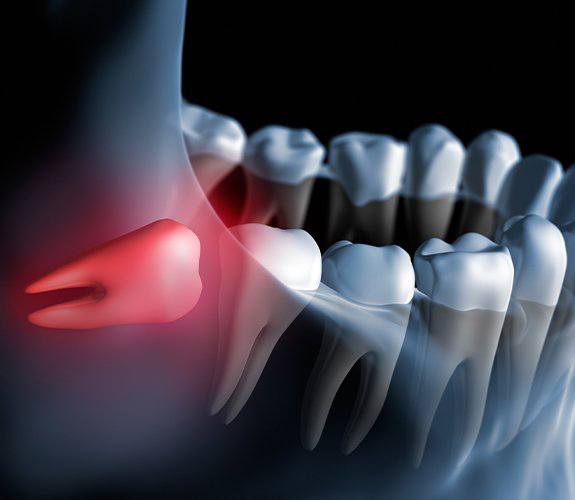
We may suggest extracting a tooth for several reasons, including:
- A visibly damaged tooth can’t be repaired.
- Severe decay in a tooth can’t be treated.
- Crowded teeth keep you from undergoing orthodontic treatment.
- Impacted teeth below your gumline are at risk of infection.
- Teeth have become loose as a result of gum disease.
If you have any of these problems or are concerned about your oral health, contact our dental office today to schedule an appointment.
The Process of Removing a Tooth
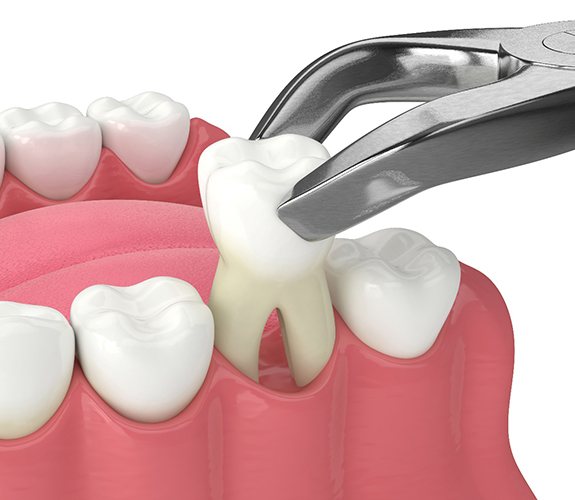
Removing a problem tooth requires one of two approaches: simple or surgical extraction. Your dentist in Franklin Park will determine which procedure is necessary during the consultation phase of treatment.
If the tooth is visible above the gumline, we will administer local anesthesia to numb your mouth before using specialized dental instruments to grab the tooth. We’ll then gently move it back and forth until it detaches from the ligaments holding it in place.
If you have a tooth that is below the gumline and cannot be seen with the naked eye, we will need to remove it surgically. This requires opening your gum tissue after administering local anesthesia. We’ll expose the underlying tooth and bone area before sectioning the tooth and carefully removing it. This approach reduces bone loss.
Tooth Extraction Aftercare

You will need to follow general instructions to ensure successful healing after your tooth extraction. Our Grand Dental – Franklin Park team will provide this information ahead of time so that you are prepared when the day of your procedure arrives.
While recovering at home, you’ll need to:
- Have someone drive you home after your appointment and plan to rest the remainder of the day. Do not attempt any strenuous or physical exercise in the few days after your procedure, as this increases blood flow and can slow down the healing process.
- Elevate your head while sleeping.
- Take over-the-counter pain relievers or prescribed pain medication as instructed.
- Drink lots of water to flush out any bad bacteria, but do not use a straw, as this can dislodge blood clots and cause dry sockets.
- Avoid any hard, crunchy, sticky, or spicy foods for a few days.
- Do not smoke or use any tobacco products.
- Brush and floss to keep your mouth clean, but be mindful when cleaning around the surgical site(s).
- After 24 hours have passed, rinse your mouth with a warm saltwater mixture.
Understanding the Cost of Tooth Extractions
Determining the cost of tooth extractions in Franklin Park requires a scheduled visit with one of our dentists. At Grand Dental – Franklin Park, we recognize that every case is unique, so we will consider various factors known to affect treatment costs. Once we establish the estimated price, we will discuss how to use your dental insurance and if you need further financial assistance.
Factors That Can Affect Tooth Extraction Cost

When meeting with a dentist in Franklin Park, you will be evaluated based on the factors listed below:
- Do you require additional dental treatment to address gum disease, existing tooth decay, bone resorption, etc.?
- Which tooth needs to be removed, and where is it located inside your mouth?
- Is the tooth visible above the surface or impacted (beneath the gumline)?
- Will you require dental sedation as well as local anesthesia?
Does Dental Insurance Cover Tooth Extractions?
When comparing dental insurance plans, you will find differences in monthly premiums, annual deductibles, and more. However, when reviewing the restorative services that are commonly covered (in part) by dental insurance companies, you will likely find tooth extractions listed. This is because tooth removal can be an effective way to safeguard your oral health and prevent future problems.
We recommend that you review your plan or have a member of our team help you when determining how much your insurance pays. Generally speaking, it is probably between 50% and 80%.
How to Make Tooth Extractions Affordable

At Grand Dental – Franklin Park, we know that not all of our patients have dental insurance, so paying for this type of treatment out of pocket can be difficult or impossible. This is why we also offer flexible financing and an in-house membership plan.
With CareCredit* or Alphaeon Credit, you can make monthly payments toward your total bill over a designated period. It works similarly to a credit card, but there are no surprise fees, you can choose from several special financing options.
With our Grand Advantage Plan, you can pay a single membership fee and receive 20% off available in-house dental services.
*Subject to credit approval. Visit CareCredit.com for more information.
Tooth Extraction FAQs
Is there an alternative to a tooth extraction?
If your dentist recommends a tooth extraction in Franklin Park, it is because other possible solutions are unlikely to be successful. Root canal treatment is considered the last restorative treatment to try before a tooth needs to be removed. This eliminates the infection, preserves the existing structure, and ensures the natural tooth remains in place with a custom dental crown. However, if this is unlikely to improve the condition of your tooth, the only possible solution is to extract it.
Can I smoke after getting a tooth extracted?
You should not plan to smoke immediately after having a tooth extracted. The healing process will be significantly delayed if you smoke cigarettes, cigars, pipes, e-cigarettes, or use any other tobacco products.
You should plan to avoid smoking for at least one week after treatment; however, it’s best to seek cessation resources so that you can quit altogether. If this is not possible, try waiting at least two weeks before picking up the habit again so that your mouth has a better chance of healing properly.
What are the risks of tooth extractions?
The most common risk associated with tooth extractions is a dry socket. This occurs when the blood clot that forms after removal becomes dislodged. It can cause pain and possibly an infection, which may require additional treatment.
A dry socket can form if you use a straw, spit, or vigorously rinse your mouth. It can also occur if you touch it or resume unhealthy habits, like smoking.
If you develop a dry socket, do not wait to call our office. One of our dentists will need to evaluate the situation and administer appropriate treatment right away to avoid further issues.
Can I leave a space empty after a tooth extraction?
The only sockets that can be left empty after extraction are those that contain wisdom teeth (third molars). Otherwise, all other teeth need to be replaced. The reason is that the underlying jawbone requires stimulation to avoid resorption over time. Without a tooth root to perform this action, the bone will deteriorate and weaken, which can lead to additional tooth loss.
After you heal from your extraction, our team will discuss replacement options, which may include a dental bridge, a denture, or a dental implant. By inserting a new tooth in its place, you will be able to eat normally again and speak without a lisp or impediment.
More to Explore
I Need a Checkup & Cleaning I Need a Dentist for My Child I Have a Cavity or Broken Tooth I am Missing One or More Teeth I Am in Pain & Need Help I Want to Enhance My Smile I Want a Straighter Smile I am Concerned About Gum Disease I Have Dental Anxiety I Want to Learn About Sleep Apnea View Our Services